Newsletter Tuesday May 12, 2026, 11:59am - by seantaylor
Bon Voyage to Instructor/Performer extraordinaire Rick Andrews, Musical Megawatt auditions, help pass the CREEP Act, internship, hoodies, mixers (improv jams), new offerings from Dennis Pacheco, Charlie Nicholson, Armando Diaz, Louis Kornfeld, Elana Fishbein, Peter McNerney, Cheryl Horne, Jacob Horn, Nat Silverman, Summer Intensives, and Ask an Improviser with Scott Austin.
|
|

|
 |
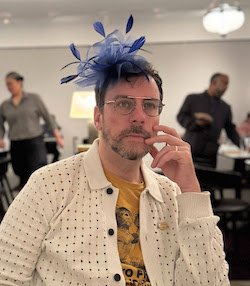
| Bon Voyage, Rick Andrews! A heartfelt "thank you" to a Magnet icon. |
|
|
 |
| May 20th is the last day to sign up to audition for Musical Megawatt. Visit here for more info |
|
|
 |
| Magnet supports The CREEP Act! See how you can get involved today! |
|
|
|
 |
| Want to earn credit toward classes? Learn about our internships program. |
|
|
|
|
|
|
|
|
|
|
|
|
|
|
|
|
|
|
|
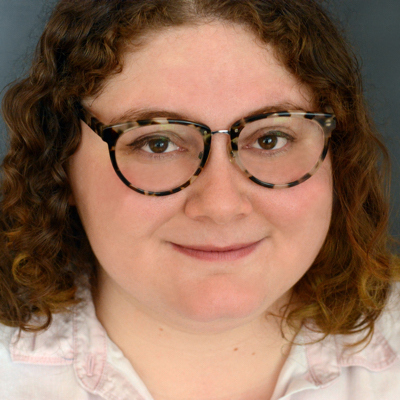
Ask an Improviser
"What is the most important improv lesson you ever learned?" |
|
|
| Performer Scott Austin
|

|
"Stop worrying about the plot!
As an improviser who mostly performs narrative-based musical improv, some of the best advice I have been given is to stop asking 'what needs to happen next?' I used to stand on the sidelines and try to write the show that was unfolding before me. I was hyper-focused on the plot. Breaking that habit has helped me in several ways. One, it makes me more present. I am able to stay in the set with my teammates instead of thinking five steps ahead. I’m listening. Two, by not focusing on plot, I am able to be a more emotional player. Yes, it’s more fun, but I believe it makes me a better improviser as well. The plot will happen, but how the characters feel about the plot is a lot more interesting. Additionally, by listening instead of planning, I am able to initiate or receive the next line with more freedom to play. I don’t enter scenes trying to telegraph complicated plot moves to my teammates. Rather, I stay present and loose. Now when I am watching from the sidelines, I think of what energy can be added to the set rather than what plot device should happen. I think of how I can support the plot that already exists.
We all know 'Yes, And.' Well, I’d like to justify the weight of those things. Nikita Burdein taught my team an exercise he called '99% Yes, 1% And.' If most of my work is accepting and supporting the first offer, it’s going to be more fun for me and for the audience as well. Sure, I still add to the plot of a set, but I try to do it in a collaborative way rather than trying to be Aaron Sorkin while watching from the sidelines."
Check out Scott on stage at the Magnet on Thursdays at Musical Megawatt with his ensemble Lil' Spoon!
|
|
|
|